Poppies, Prayers and My Grandad’s War Stories
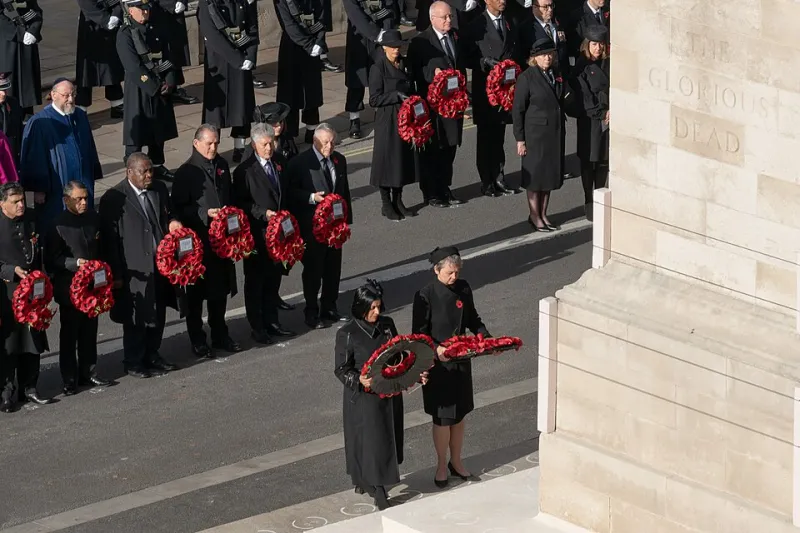
Photo: Department for Culture, Media & Sport, CC0, via Wikimedia Commons
Tomorrow is Remembrance Sunday 2026, and I’ll be standing at the edge of the village green with a poppy pinned to my coat. It’s my first as a Muslim. I took my shahada less than a year ago, so I’m still learning where all the pieces fit. Grandad’s medals are in a shoebox in my spare room, and I keep meaning to have them framed. This weekend felt like the right time to open the box.
The shoebox under the stairs
My grandad was not a famous soldier. He did his National Service in the Royal Engineers in the late 1950s, then spent years in the Territorial Army. He never marched in big parades. He was the sort of man who fixed things, made tea, and complained about the cost of petrol. Nan kept his medals in a shoebox with old photographs and a programme from a reunion he never talked about.
When he died in 2019, I remember thinking that the medals looked smaller than they should. They’re just metal and ribbon. But they carry a whole life of quiet duty. I used to think Remembrance Sunday was about him, in a simple way. Now I think it’s about him and about everyone else’s grandad too.
What the poppy means to me now
Before I converted, the poppy was just something you bought in November because it was the done thing. You put it on your coat, you stood for two minutes, you got on with your day. I didn’t think much about it.
Now I’ve had to think about it properly. Some Muslims don’t wear poppies. They worry it looks like glorifying war or buying into a nationalist ritual. I get that. I’m not going to pretend every Muslim feels the same, because we don’t. But for me, the poppy is a remembrance pin, not an object of worship. It doesn’t compete with tawhid. The Royal British Legion sells them to fund veterans and their families, and the two-minute silence is a chance to be still.
The Qur’an tells us that saving one life is like saving all of humanity, and that we should stand for justice. Remembering the cost of war feels compatible with that. I don’t think Remembrance Sunday asks me to approve of every war ever fought. It asks me to remember that people suffered, and that we should try to do better.
Loyalty doesn’t have one accent
One of the quiet fears I had before taking shahada was that becoming Muslim would mean handing back my British identity. I worried that I’d have to choose between my family’s history and my faith. I worried that people would look at me and see someone who had ‘changed sides’.
I haven’t. I’m still the same person who watches the football, drinks too much tea and gets annoyed by Southern Rail. Being Muslim isn’t a nationality. Loyalty to Allah doesn’t require me to erase my grandad. Some family members asked if converting meant I’d signed up to a different country. It didn’t. I’ve changed direction in worship; my people are still my people.
The mosque remembrance coffee morning
Last week our local mosque held a small remembrance coffee morning after Jummah. There were paper poppies on the table, a plate of samosas, and a retired soldier who talked about serving in the 1990s. The imam said a few words about the sanctity of life and the duty to look after those left behind. Nobody asked me to prove my Britishness. Nobody asked me to choose a side.
An aunty handed me tea and said, ‘Your grandad would be proud.’ I cried into a digestive. It was such a small thing, but it meant more than I can explain. I had spent weeks worrying that the mosque and the cenotaph were two different worlds. They’re not. They’re just two places where people gather to remember and to hope.
A letter to Grandad
Dear Grandad,
I still haven’t framed your medals. I’m sorry. I’m learning that grief is slow and that I’m not as organised as Nan was. I’ll wear a poppy for you tomorrow. I’ll stand in the cold and I’ll say your name. I can’t pray for you the way I pray for Muslims who have died — that’s one of the hard edges of conversion — but I can remember you, honour what you did, and pray for peace. I hope you’d have asked me questions rather than shouted at me. I think you’d have liked the samosas.
Love, your granddaughter.
If you’re a convert with a forces family
A few practical thoughts, from one convert to another. Tell your family what you’re doing before the day if you can. ‘I’m coming to the service, I’m not coming to start a debate’ is a useful sentence. Wear a poppy if you want to; don’t if you don’t. Neither makes you a bad Muslim. Ask your local mosque if they’re marking Remembrance, and if they’re not, suggest a coffee morning. Observe the silence. It’s two minutes — you can use it for du’a or quiet reflection. Don’t use the day to argue about foreign policy. There’s a time and a place, and the cold village green is neither. If you’re struggling, find a convert mentor. You’re not the first and you won’t be the last.
Tomorrow I’ll stand with my poppy and my prayer beads in my pocket. I’ll say Grandad’s name. And I’ll come home and make tea. That feels like enough for now.