Cold Hands and a Very British Kind of Grief: My First Remembrance Sunday as a Muslim
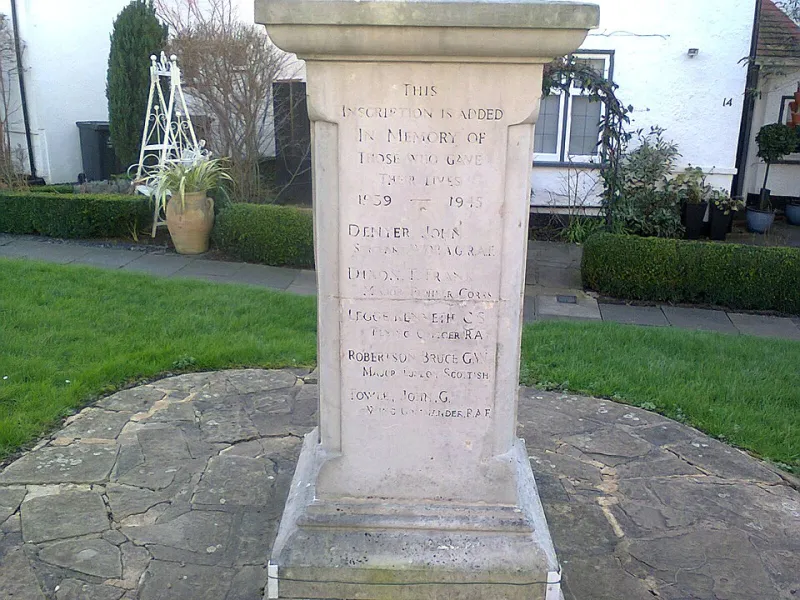
Photo: David Howard , CC BY-SA 2.0, via Wikimedia Commons
The clock on the church tower said five to eleven. My hands were cold, my coat was damp, and there was a poppy pinned to my lapel that I had bought from a man outside the post office who called me “duck”. I had been a Muslim for eighteen months. I had never felt less sure of what I was doing.
It wasn’t the poppy that bothered me. It was the silence before the silence — that odd, shuffling hush when a village stops pretending it isn’t a village and stands together in the same direction. I looked at the war memorial and thought about my grandad’s medals in a drawer at my mum’s house. Then I thought about the fact that I was the only person in that square wearing a headscarf. Then I thought about the phrase that would come later, over tea and a Bourbon biscuit: “Whose side are you on, then?”
Why I Almost Stayed Home
My family is not a military family in the dramatic sense. We don’t have a framed portrait of a great-grandfather in uniform above the fireplace. But my grandad served in the Royal Navy, and his uncle — a man whose name I only know from a brass plaque in a church I haven’t been inside since I was a child — didn’t come home. Remembrance Sunday was never a big production in our house. It was just something we did. My mum would watch the Cenotaph on telly, and my dad would say “shush” during the two minutes, and then we’d all get on with the roast.
After I took my shahada, I worried that standing at the memorial might look like an endorsement of war. I also worried it might look like a betrayal of my new faith. And beneath both of those worries was a smaller, more embarrassing one: I didn’t want anyone to think I had chosen a side against Britain. I know how that sounds. But converts spend a lot of time being asked to prove things — that we’re sincere, that we haven’t been brainwashed, that we still love our mums — and I had started to flinch at anything that felt like a test.
So I almost stayed home. I had a plan. I would drink tea, read a bit of Quran, and quietly ignore the whole thing. It was a good plan. It lasted until my neighbour knocked on the door and asked if I was walking down to the square.
The Poppy Is Not a Creed
Here is what I have learned since: the poppy is not a shahada. It is not a pledge of allegiance. It is not a religious symbol, and wearing one does not make you a member of the Royal British Legion’s theological committee. It is a pin. It exists to remember the dead and to raise money for people who have been damaged by war. Plenty of Muslims wear them. Plenty don’t. I wore mine because I was remembering my great-uncle and because honouring the dead is not a foreign idea to Islam. It is, in fact, a fairly central one.
The awkward bit is that Remembrance Sunday happens in and around churches. There are hymns. There is a vicar. There is a collection plate that I politely passed over. Some converts find that uncomfortable, and I understand why. But standing respectfully in a borrowed building while other people pray is not the same as praying their prayers. We are allowed to be guests. We are allowed to be neighbours. We are allowed to be British Muslims who know the words to the hymns without singing them.
Two Minutes Is a Long Time
When the bugler started, I did what everyone else did. I stopped. I looked at the names on the memorial. I thought about my great-uncle, and I thought about the fact that I don’t even know where he is buried. I thought about the people in Gaza and Sudan and Ukraine, and the people in my own town who are grieving someone who died in a way that never made the news.
I did not pray a janazah prayer for the dead. That is not mine to offer, and most scholars are clear about that. But I did make a quiet dua — for mercy, for peace, for the living who are left behind. I remembered a hadith I had read in my early days as a Muslim: the Prophet, peace be upon him, once stood as a funeral passed by. Someone told him it was a Jewish funeral. He said, “Was he not a soul?”
That hadith has done a lot of work in my life. It doesn’t answer every question about interfaith prayer and it doesn’t turn Remembrance Sunday into an Islamic ceremony. But it tells me something about how to stand in a square with people who are grieving, and how to be a person of faith without turning every moment into a debate.
The Awkward Bit With the Tea Urn
After the service, we were invited into the church hall for tea and biscuits. I nearly didn’t go. I’m glad I did. A man in a blazer asked me, in front of about six people, “So whose side are you on, then?”
I said, “I’m on the side of the people who didn’t come home.”
He laughed, then went a bit quiet, and then he told me about his dad, who had been at Dunkirk and never spoke about it. We stood there with our tea going cold while he talked. It was the most useful conversation I have had in a church hall without actually being in a church.
Later, a woman asked me if Muslims were allowed to wear poppies. I said I wasn’t a mufti, but I could tell her why I do. She said she hadn’t realised. She also said she liked my coat. I have decided to take both of those as wins.
What Islam Actually Asks of Me
I am not a scholar, and I am not going to pretend that one Remembrance Sunday made me an expert on war and peace. But here is what I do know. Islam takes the sanctity of life seriously. The Quran tells believers to fulfil their agreements. The Prophet, peace be upon him, set rules for fighting that sound almost absurdly restrained from a modern vantage point: don’t kill women, children, the elderly, monks and worshippers; don’t chop down fruit trees; don’t mutilate the dead. Those rules are not an afterthought. They are the point.
Remembrance Sunday, at its best, is not a celebration of war. It is a public admission that war costs more than we like to admit. It is a village standing in the cold and saying: we remember. There is nothing in my faith that tells me to shrink from that. There is plenty that tells me to do it with humility.
For Converts Who Feel Torn
If you are a new Muslim and you are dreading the second Sunday of November, here is my gentle guide. You do not have to wear a poppy. If you do, know why you are doing it. You do not have to sing the hymns. You can stand in the silence and make dua in your own heart. You can go to the memorial after the church service if the building makes you uncomfortable. You can talk to your non-Muslim family about what you are doing and why, and let them see that you are not rejecting them by being honest about your boundaries.
The only thing I would ask you not to do is let anyone tell you that your faith makes you less British, or that your Britishness makes you less Muslim. Both of those stories are boring and both of them are wrong.
I walked home with my poppy still on. I took it off in the hallway and put it next to my grandad’s medals, which I had got out of the drawer that morning and left on the sideboard. I didn’t have a crisis of faith. I had a cup of tea. And I thought, not for the first time, that remembrance is a kind of sabr — standing still when you would rather move, remembering when it would be easier to forget.