The Plastic Chair Has No Qibla: A Year of Sabr in NHS Waiting Rooms
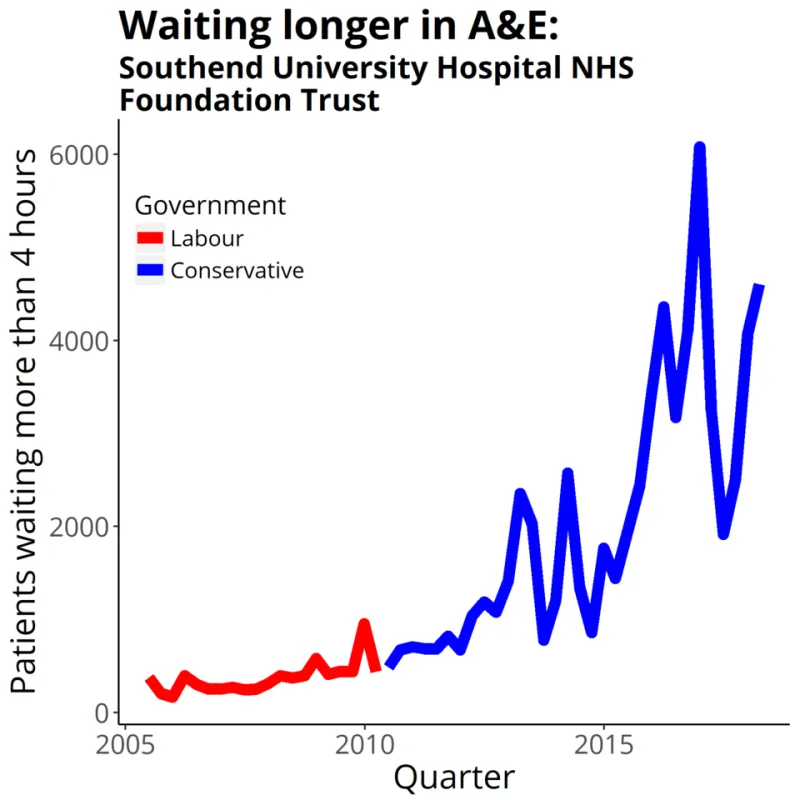
Photo: Rathfelder, CC BY-SA 4.0, via Wikimedia Commons
The first time I tried to pray in a hospital corridor, I was holding a paper cup of tea I did not want and a parking ticket I definitely did. The tea was the colour of weak gravy. The ticket was £4.20. Somewhere behind a set of double doors, a consultant was running forty minutes late, and I was trying to work out whether the alcove by the fire extinguisher was a legitimate place to unroll a prayer mat.
I had been on the waiting list for nearly a year by then. Not a dramatic year — no sirens, no midnight dashes — just a slow accumulation of letters with NHS logos, appointments moved to Tuesdays, and that particular British hope that something might happen soon, followed by the equally British acceptance that it probably would not.
I became a Muslim in the middle of all that. Which meant that, alongside learning how to explain my new faith to my mum, I was also learning how to practise it in places designed for waiting: plastic chairs, lukewarm radiators, a radio station playing something from 1998, and a digital board that clicks over every few minutes like a very polite threat.
The plastic chair has no qibla
There is a particular kind of patience that waiting rooms teach you. It is not the serene, candlelit patience of a nice book about trust in God. It is the patience of sitting still while your phone battery dies and a stranger coughs near your shoulder.
Before I became Muslim, I would have called that endurance. Now I would call it something closer to sabr — but not the passive version I used to imagine. Sabr is not pretending everything is fine. It is not sitting on your hands while a problem gets worse. In the Quran, patience is tied to action, to steadfastness, to keeping going when the easy thing would be to flounce out of the waiting room and drive home.
So I learned to do the boring, practical things. I rang the appointments line. I asked about cancellations. I kept a folder — yes, an actual folder — of letters and dates. I asked my GP surgery to explain what was happening, and then asked again when the explanation was not clear. None of that felt especially spiritual at the time. It felt like admin. But I think it was part of the same thing: trusting God while still picking up the phone.
Small talk is its own language
The waiting room has its own etiquette. You do not sit directly next to someone if there are other seats. You do not make eye contact for longer than half a second. You definitely do not ask what they are in for. But you do say “you alright?” in that vague, upward-inflected way that means “I acknowledge your existence and require nothing further.”
When you are visibly Muslim — or just newly Muslim and still working out what that looks like — those small interactions can feel loaded. Someone offers you a cup of tea from the trolley. You say no. They ask why. You wonder whether this is the moment to explain that you are trying to be more mindful of what you consume, or that you have already had three cups, or that the tea in this particular hospital tastes like a memory of tea rather than tea itself.
Most of the time, the kindest answer is the shortest one. “I’m alright, thanks — you go ahead.” That is a complete sentence. You do not owe anyone your life story in a corridor. If someone genuinely asks and seems interested, you can say you are Muslim and keeping things simple today. If they do not, you have lost nothing.
I learned that faith does not require me to turn every waiting room into a dawah stall. Sometimes the most faithful thing is to be pleasant, hold the door, and let the conversation be about the weather.
Praying in a corridor without making it a scene
There is no perfect guide to praying in a British hospital, because every building is different. What I have learned is to ask. Reception staff usually know where the quiet room or multi-faith space is, even if it is currently being used for a staff meeting. The chapel is often open. A stairwell is not ideal, but it is not a sin.
When I could not find a clean place, I sat and made dua. I am not a scholar, so I will not pretend to give a ruling on every situation — ask someone qualified if you need a proper answer. But I do know that a whispered dua in a plastic chair is still a conversation with God. The prayer mat is helpful. The intention matters more.
Practical things helped. I kept a small bag with a folded scarf and a clean plastic bag to sit on. I learned where the accessible toilets were, and I learned to dry the floor properly after wudu because slipping over in a hospital is not the testimony I want to give. I stopped worrying about whether my phone’s compass was exactly right. If I was doing my best in a corridor, I trusted that God knew the difference between carelessness and constraint.
And when the time for prayer passed while I was waiting, I did not beat myself up. I prayed when I could. I asked for forgiveness for what I could not manage. Then I got on with the appointment.
The people in the chairs
What surprised me most was the community of the waiting room. Not a warm, chatty community — more a silent agreement that we were all in the same boat. There was the older man who did the crossword with a pencil he kept behind his ear. The woman who knitted the same square for three months. The teenager who sat with his mum and pretended not to be frightened.
I started to notice them because I had less to do. When I was not making dua or checking the time, I was just sitting. And sitting with people, even strangers, is a strange kind of prayer. You cannot fix their wait. You can give up your seat. You can share a charger. You can say “you alright?” and mean it a bit more than usual.
When the letter finally came
The appointment did come. Eventually. It was not dramatic. A different consultant, a new plan, a follow-up in six months. I walked out into the car park, sat in my car, and cried for about ninety seconds. Then I drove home and had a cup of tea — a decent one, from my own kitchen.
I would like to tell you that the year taught me to be perfectly patient. It did not. I still get twitchy when a letter is late. I still refresh my emails like a man trying to summon a bus. But I have a different picture of sabr now. It is not a plastic chair. It is what you do in the plastic chair: the phone calls, the duas, the small kindnesses, the getting up when your name is called.
The corridor had no qibla marker. But I found direction anyway.