What a Second-Hand Rail Taught Me About Dressing for Faith in Britain
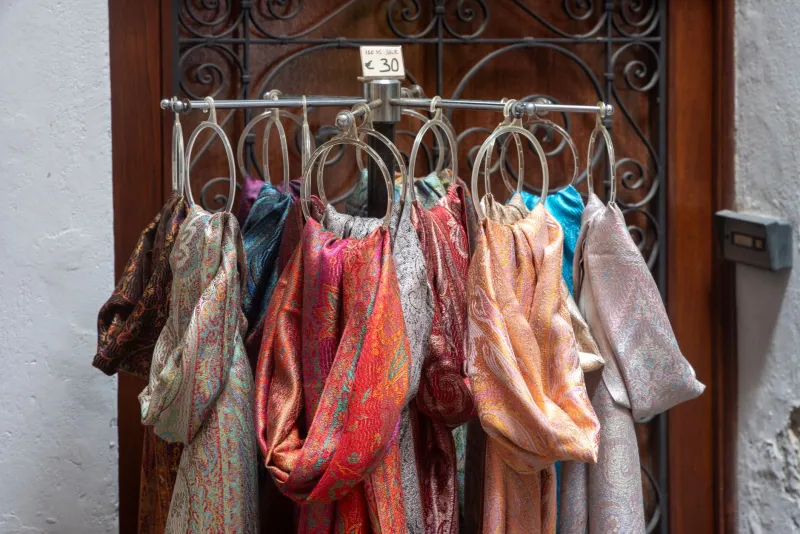
The first hijab I bought with my own money cost £2.50. It was a deep green cotton square, slightly faded at the hem, folded on a charity shop rail between a Christmas jumper and a child's raincoat. I was three weeks into being a Muslim, and I had already convinced myself that dressing modestly was going to bankrupt me. The £2.50 hijab proved otherwise.
That was in a town where the rain comes in sideways and the high street has more charity shops than coffee chains. I had walked past that rail a hundred times before I took my shahada. After it, the rail looked different. Not because the clothes had changed, but because I had. I was looking for something that felt like me — and I had no idea what that looked like yet.
The Rail That Changed My Mind
A few weeks later, in a different shop two streets over, I found an abaya for £4. It was plain, navy, and a size too big. I bought it anyway. I took it home, turned up the sleeves with a needle and thread my mum had given me years ago, and wore it to the mosque for the first time. Nobody looked twice. That was the point.
What I learned slowly — and what I wish someone had told me faster — is that modest dressing on a British budget is not a compromise. It is a skill. And like any skill, it gets easier with practice and a bit of shamelessness.
Charity Shops Are Not a Consolation Prize
There is a particular snobbery about second-hand clothes in some circles, as if buying pre-loved means you have failed at something. I have never understood it. Charity shops are full of good fabric: long skirts, loose shirts, oversized knitwear, scarves in every colour. The trick is to stop looking for things labelled 'modest' and start looking for things that cover, drape and layer.
I have found linen trousers in Oxfam, a wool coat in the British Heart Foundation shop, and more than one excellent headscarf in a basket by the till. You have to go often, and you have to be willing to leave empty-handed. But when it works, it works. The £4 abaya is still in my wardrobe. The coat has been re-lined twice.
The Supermarket Basics Nobody Tells You About
You do not need a designer abaya to dress modestly. You need layers. Primark and supermarket clothing aisles — Tesco, Asda, Sainsbury's — are full of long-sleeved basics, plain maxi dresses, and loose trousers that cost less than a takeaway. I have built most of my everyday wardrobe from a handful of these pieces: a few long-sleeved tops, two maxi skirts, a pair of wide-leg trousers, and a rotation of scarves.
The trick is to buy in neutral colours that all work together, then let the scarves do the talking. A £6 scarf can change a £10 outfit entirely. And if you are worried about quality, buy one good thing rather than three cheap things when you can. A well-made second-hand coat will outlast a fast-fashion one by years.
Returns, Borrowing and the Sisterhood Economy
Online shopping is a gamble when you are new to this. Sizes vary wildly, fabrics can be sheer, and what looks modest on a model can arrive looking like a nightdress. My rule is simple: only order from places with free returns, and never keep anything you are unsure about 'just in case'. That hesitation is how wardrobes fill up with clothes you never wear.
The other thing nobody tells you is that borrowing is allowed. Some of my favourite hijabs came from a friend who had a drawer full of duplicates. Another friend lent me a proper abaya for a wedding when I had nothing formal enough. There is a quiet generosity in Muslim communities — a sisterhood economy of hand-me-downs and 'take this, it will suit you' — and it is not charity. It is just what people do.
Facing Family, Work and the High Street
The hardest part was not the money. It was the looking. The first time I wore a hijab to my parents' house, I felt like I was walking into a job interview. My mum asked if I was cold. My dad said nothing for twenty minutes and then asked if I wanted a cup of tea. Neither of them said the thing I was afraid of, which was that I looked different. Of course I looked different. That was the point.
At work, I worried about being seen as political. In reality, most people just asked where I got my scarf. On the high street, I got a few looks — mostly from older women who seemed more curious than hostile. Britain is not a country that comments much on strangers' clothes, and I learned to appreciate that reserve. It gave me room to figure things out without an audience.
When Thrift Becomes Confidence
There is a strange freedom in buying a £4 abaya and wearing it like it cost £400. Not because you are pretending, but because you have decided that the price tag is not the point. The point is that you are covered, you are comfortable, and you are showing up as yourself.
Modest dressing on a budget is not about deprivation. It is about resourcefulness. It is about learning the shape of your own body and your own comfort, and then finding clothes that fit that shape without emptying your bank account. It is about walking into a charity shop on a wet Tuesday and walking out with something that makes you feel like you belong.
The green hijab is still in my drawer. It has a small pull near one corner now, and the colour has faded further. I wear it when I need to remember that I started somewhere. That I did not need much. That I was enough.