Sponge Cakes and Small Print: What a Village Show Taught Me About Belonging
I moved to the village two winters ago. It’s the sort of place where the parish newsletter is still printed on paper, the bus comes twice on a good day, and everyone knows whose dog barks at the postman. I’m the new Muslim in town — or at least the most visible one. Most of the time that’s fine. Occasionally it means answering questions in the Co-op queue about why I’m not buying the reduced sausage rolls. But until this summer, I hadn’t quite worked out how to be both present and comfortable in the middle of a proper English village do.
Then the village show came round, and the organisers put out a call for volunteers. I signed up for the cake tent. I like cake. I like tents. It seemed like a low-risk way to meet people who weren’t already my neighbours.
The serious business of the cake tent
Let me tell you something: the cake tent at a British village show is not a casual affair. It is a judicial proceeding. There are categories for Victoria sponge, fruit cake, lemon drizzle, decorated biscuits for children, and something called a ‘family favourite traybake’ that seems to inspire both pride and quiet feuds. The WI ladies run it with the efficiency of a small government department. I was handed a clipboard, a pen and a look that said: do not mess with the entry numbers.
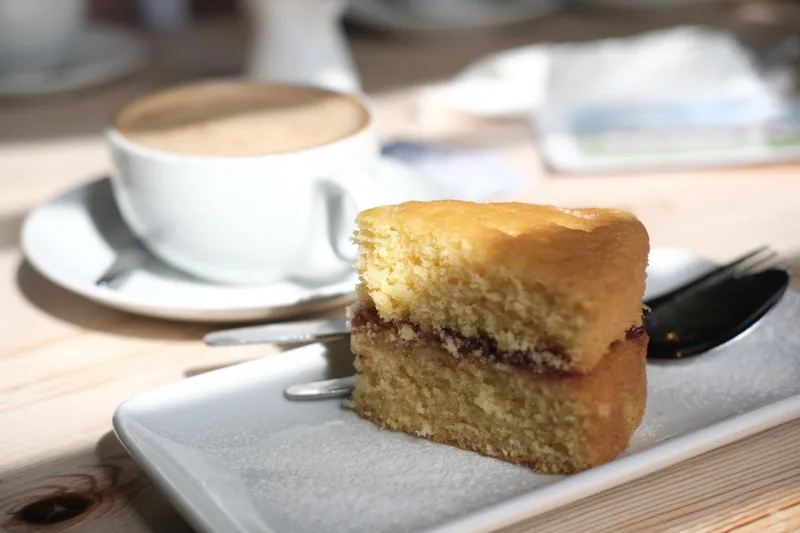
For the first hour I mostly shuffled jam jars and tried not to drop anything. Then the judging happened, and afterwards people drifted in to see the scores. A woman called Margaret — floral apron, reading glasses on a string, the kind of person who probably has a spare key to the church hall — stopped in front of the winning Victoria sponge. She looked at me, then at the cake, then back at me.
‘You’re the Muslim lady, aren’t you?’ she said. Not unkindly. Just directly.
I said yes, that was me.
She pointed at the sponge. ‘Can you eat this? Only my niece said gelatine might be in the icing, and I thought, well, I don’t want to offer something someone can’t have.’
Small print and small kindnesses
It was such a small question. But it wasn’t really about the sponge. It was about whether I belonged at the table, and whether she was allowed to ask. I told her gelatine can be a tricky one — it’s often in shop-bought icing, jelly, marshmallows, some sweets — but a traditional Victoria sponge usually just has butter, sugar, eggs, flour and jam. She produced her recipe from her handbag, folded into quarters. We read the ingredients together like two detectives. No gelatine. Maybe a bit of buttercream from a tub, but she thought it was vegetarian. I said that sounded fine.
She cut me a slice. I ate it standing up, with a plastic fork, while a man in a flat cap explained to me that the runner beans this year were ‘a disgrace’ because of the weather. It was one of the most normal moments I’ve had since taking shahada. Not normal in a boring way. Normal in a ‘nobody is making a thing of it’ way.
That’s the odd gift of small conversations. They don’t solve every big question about faith and belonging. But they make the big questions feel less like walls and more like doors.
Skipping the beer tent without making a speech
Later in the afternoon, a few of the volunteers drifted towards the beer tent. Someone asked if I was coming. I said I’d skip it, but I’d happily help with the raffle. There was a tiny pause — the sort where you can almost hear someone deciding whether to ask a follow-up or let it go. Then a bloke called Dave said, ‘Fair enough. You can do the draw. You’ve got the neatest handwriting.’
And that was it. No lecture. No awkward explanation about alcohol. Just a reassignment to raffle duty and a cup of tea from the urn.
I’ve learned that I don’t have to announce my whole faith every time I decline something. A simple ‘I don’t drink, but I’ll help with the tombola’ does the job. Most people are far less interested in debating theology than we fear. They’re mostly interested in whether the raffle prizes are any good and whether it’s going to rain on the bouncy castle.
Why the awkward bits matter
I used to think belonging meant blending in. Avoid the tricky questions. Don’t be the one who needs the ingredients checked. Don’t be the one skipping the beer tent. Don’t make people uncomfortable.
But the village show taught me something different. Belonging isn’t built by avoiding awkwardness. It’s built by surviving it together. Margaret asked a slightly clunky question about gelatine, and I answered it honestly. Dave didn’t fully understand why I wasn’t coming to the beer tent, but he didn’t make it weird. I stayed for the raffle, clapped when Mrs Patel won the hamper, and helped stack chairs when it was over.
By the time I walked home, I felt less like the only Muslim in the marquee and more like someone who might be asked back next year. That’s not a small thing. In a rural English town, being asked back is its own kind of acceptance.
The cake tent question
The cake tent question wasn’t really about gelatine. It was about whether there was room in the recipe for me. And there was. There usually is, if you’re willing to stand in a slightly muddy field and talk about icing with a stranger.
So if you’re new to a place, and you’re worried about being the odd one out at the village show, the summer fete or the school fair, my advice is simple: volunteer for something. Bring your honest answers. Accept the slice of cake when it’s halal. Skip the beer tent without apology. And stay for the raffle. You might be surprised how much belonging gets built in the small print.