Mulled Punch and Minced Pies: Staying Close to My Family Without Losing My Faith
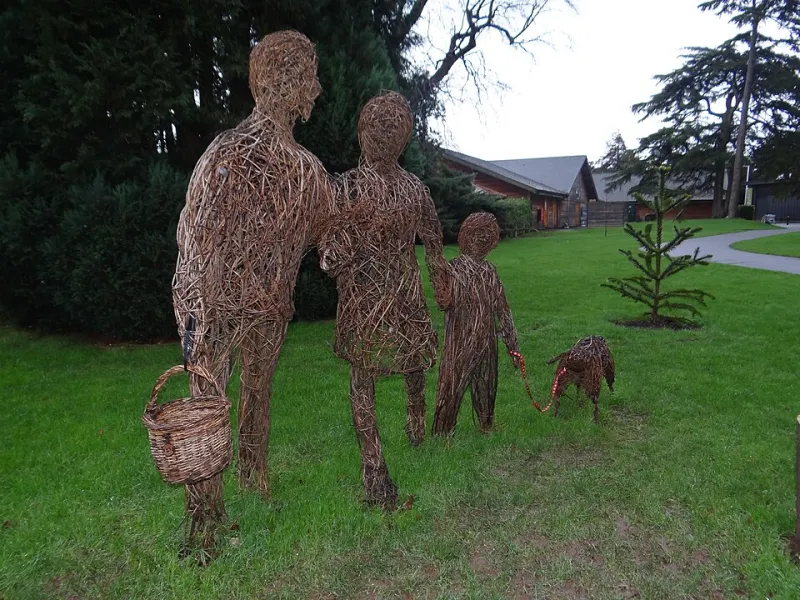
Photo: Ian Paterson , CC BY-SA 2.0, via Wikimedia Commons
A week ago I stood in a muddy field in Kent, wrapped in two coats, eating a toffee apple that was mostly apple-flavoured ice, watching my nephew wave a sparkler at his dad. There was a bonfire the size of a small bungalow. Somebody's thermos of hot chocolate had leaked into somebody else's bag. It was, in every sense, Bonfire Night with my family.
And it was fine. Better than fine, actually. Nobody asked where I'd been for Maghrib. My brother-in-law made a point of buying the veggie sausages separately so I could eat the soup without doing that awkward hovering thing. This has taken a few years to get to.
The first Bonfire Night was not like this
The year I took my shahada, I genuinely thought I'd have to skip it. I'd absorbed a lot of advice very quickly, most of it from strangers on the internet, and I'd come away with the impression that anything with the faintest whiff of a Christian or pagan origin was off-limits. Parkin, fireworks, the whole lot.
So I bailed. I remember lying to my mum about a migraine and then sitting in my flat feeling simultaneously righteous and about nine years old.
What I worked out over the following years — through actual conversation with teachers and friends, not comment sections — is that family gatherings aren't a test I pass or fail. They're people I love. And there's a difference between marking a religious festival as your own and simply being present in a family that's doing its thing.
Christmas is a different question, and I don't pretend otherwise
Bonfire Night is easy. Christmas needs a bit more thought.
There's a stretch here between mid-November and Boxing Day where my family's whole calendar revolves around a festival I don't observe: the Coca-Cola advert, the lights switched on in town, the mince pies appearing at work in week twelve. My mum's Christmas Eve is a carol service, then back to hers for something warm. Christmas Day is a house full of people, pigs in blankets, crackers, paper hats, the speech at three.
I've never celebrated it as a religious thing, and I don't. But I decided early on that I wasn't going to disappear from my family's year, because disappearing would have cost all of us more than it gained.
Where the friction actually turns up
The tricky bits are almost never theological. They're logistical and social, and they come in three flavours.
Alcohol. Some years there's a glass of something being passed around. My line, said cheerfully and often: I'm fine, thanks, I've got a drink. Nobody has ever pushed it past the second offer.
Food. My aunt's gravy has never been entirely trustworthy on the halal front, so I bring a dish I can eat, I eat plenty, and I don't make anyone narrate the ingredients list. It helps that my mum now rings me the week before to check what's happening with the turkey.
The gift exchange. School 'secret santa', work Kris Kringle, family presents. I don't take part in the ones that are essentially ritual, and I happily buy presents for my niece and nephew in December because they're eight and five and it's not about me.
An answer I've stopped apologising for
The sentence that has done the most work over the years is very short: 'I don't celebrate it, but I'm not going anywhere.'
It gives people something to hold on to. It says: this matters to me, and so do you. In practice it's quieter than that. I turn up. I bring something. I take the paper hat. I don't sit at the table while everybody lowers their heads and then have to explain myself for twenty minutes. I slip out if it's a service and sit in the car with a podcast.
A quiet exit is not a statement. It's just a quiet exit.
What I've built for myself
One thing I wasn't expecting: over time you start wanting your own rhythms rather than just opting out of someone else's.
A few of us now do a meal in mid-January — a proper one, with friends who also find December a bit odd. I host an Eid breakfast in our kitchen that has become the event my nephew asks about, and I've noticed he's more excited about it than I ever expected. My mum came once and brought a lemon drizzle cake because she didn't want to arrive empty-handed, and I nearly cried into the washing-up.
That's the bit people don't tell you. Making your own traditions isn't about replacing what you grew up with. It's about adding something, and it usually takes about three goes before anyone stops finding it strange.
A year in, three years in
The first winter is strange. The second is easier. By the third, you have a shorthand with your family that no internet stranger can give you, because it was negotiated over countless cups of tea and a few crossed wires.
So if you're a new Muslim staring down your first December in a family that does all this, my only real advice is: stay in the room. Be honest, be warm, be clear about what you don't do, and be very reluctant to give up your seat at your mum's table. The faith doesn't need you to vanish. It needs you to show up as yourself.