The Kitchen Facing East: Keeping Faith in a Town With No Mosque
Photo: SMU Central University Libraries, No restrictions, via Wikimedia Commons
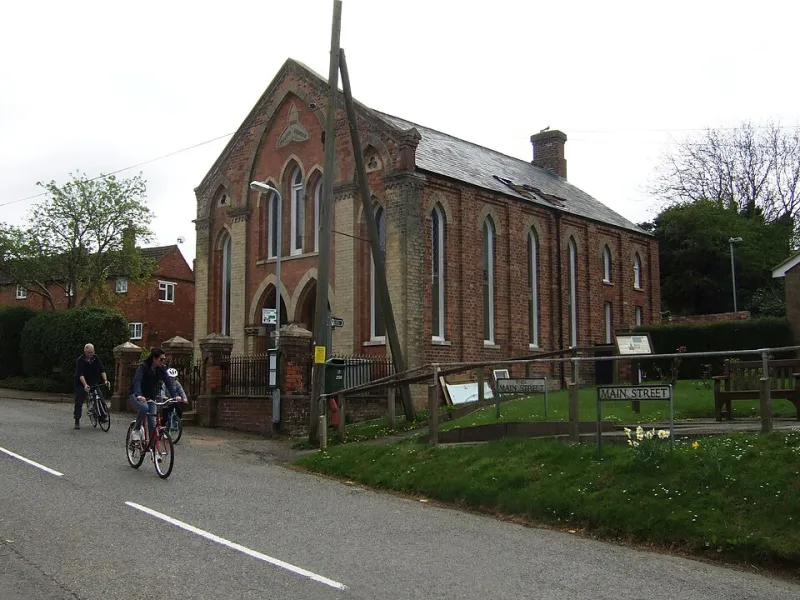
When I moved to a market town in the north of England, I knew the mosque situation would be different. I did not quite realise that “different” would mean a thirty-mile round trip, a prayer mat rolled up behind the sofa, and a quiet room at work that smells faintly of printer toner. Still, nearly three years in, I have a prayer life here. It is not the one I imagined when I took shahada in a city mosque with a busy sisters’ hall and a Tesco Express next door. It is smaller, stranger and, in its own way, more deliberate.
The first Friday was the hardest
My first Friday in town, I drove to the nearest mosque for jummah. The roads were fine. The mosque was warm and welcoming. The problem was the drive home, when it hit me that this was not going to be a casual weekly habit. It was an expedition. I remember sitting in the car outside my house with the engine off, feeling oddly embarrassed. I had moved for work, for a quieter pace of life, for a garden. I had not thought carefully enough about how faith fits into a place with no minaret, no halal butcher and no obvious community.
What helped was lowering the bar. Jummah once a week was not realistic for me every week. Praying at home, on time, was. That sounds obvious, but it was a shift. I stopped measuring my faith by how often I could get to a mosque and started measuring it by whether I had prayed. A prayer mat in the spare room, a clean towel for wudu, a phone charger near the door — these small things turned a vague intention into a routine.
Prayer is a room, a direction and a bit of negotiation
At home, my prayer space is not a dedicated room. It is the corner of the kitchen that gets the morning light, or the bedroom floor once the laundry has been moved. I use a compass app for the qibla, though I have since learned roughly which way to face by the shape of the window. I keep a spare prayer mat folded in the car and another at work. This is not glamorous. It is practical.
At work, I asked my manager for a quiet space. I framed it simply: I need ten minutes, twice a day, somewhere private. The first conversation was slightly awkward. The second was easier. Now I use a small meeting room that is usually empty at lunchtime, and a colleague occasionally asks if I am “doing the prayer thing” as if it were a gym class. I have decided not to mind. Visibility in a small town is not always dramatic. Sometimes it is a calendar block and a closed door.
You become the local Muslim, whether you like it or not
In a city, you can be anonymous. In a town of a few thousand people, you are often the only Muslim someone knows. That can be exhausting and unexpectedly tender. A neighbour asked me, very politely, whether I would mind explaining why I do not drink. A colleague wanted to know if Ramadan meant no water at all. The woman in the library asked if I could recommend a book for her grandson, who had been asking questions at school.
I have learned to keep answers short and human. I do not need to be a spokesperson for 1.9 billion people. I just need to be a person who happens to pray. When someone asks why I am not eating at the office birthday cake table, I say, “It’s Ramadan, so I’m fasting today,” and then ask about their weekend. Most people are satisfied with that. The ones who are not tend to reveal themselves quickly, and that is useful information too.
The internet is not a substitute for a community, but it helps
I have a weekly online class with a teacher in Birmingham. I have a WhatsApp group with four other converts scattered across the county. We check in on each other, share Ramadan timetables, and occasionally send voice notes that are far too long. On Eid, we meet halfway at a service station and eat chips. It is not a mosque community. It is something, though.
I also watch livestreamed khutbahs from mosques I have never visited. At first, I felt like a fraud doing this. Now I think of it as a radio signal from a bigger world. It reminds me that my small town is not the whole story of Islam in Britain. There are people praying in Bradford, Cardiff, Glasgow and Luton at the same time as me. That thought is genuinely comforting.
Small allies matter more than you might expect
The vicar at the parish church was one of the first people to make me feel less isolated. She had no theological reason to help me, but she knew the town and its rhythms. She told me which café was quiet in the mornings, which room at the community centre could be booked, and which local school might welcome a talk about Ramadan. I have since become friendly with the librarian, who lets me use the reference room for quiet reflection when the library is empty. These are not grand interfaith initiatives. They are small, ordinary alliances, and they have held me up.
The emotional work is real
I will not pretend this is easy. There are Fridays when I miss the feeling of walking into a crowded mosque. There are Eids when I cook a small meal for myself and video-call my family. There are evenings when the silence of the town feels less peaceful and more like distance. I have learned to name that feeling rather than spiritualise it. Loneliness is not a sign that my faith is weak. Sometimes it is just a fact of geography.
What helps is planning. I mark Ramadan in my diary early. I book leave for Eid. I tell one or two trusted people at work so they are not surprised when I disappear for prayer. I keep a list of practical things: where to find halal meat, which GP surgery has a quiet corner, which train station has a usable prayer room. It sounds mundane, but a faith life is made of mundanity as much as moments of transcendence.
A faith that fits the place
I used to think I needed a mosque to have a proper Muslim life. I no longer think that. I need prayer, knowledge, honest company and a bit of stubbornness. The mosque is a blessing, and I am grateful every time I get to one. But in between, there is the kitchen facing east, the car park at lunchtime, the library reference room and the WhatsApp group that never quite goes quiet.
If you are in a small British town and feeling like the only Muslim for miles, start small. Pray where you are. Ask for space. Find one ally. Join one class. Be visible enough to be known, but not so visible that you burn out. And remember that a thirty-mile trip to a mosque is not the measure of your faith. The measure is the prayer you keep, quietly, in the place you actually live.